𝙙𝙞𝙨𝗮𝗿𝗺𝗶𝗻𝗴 III
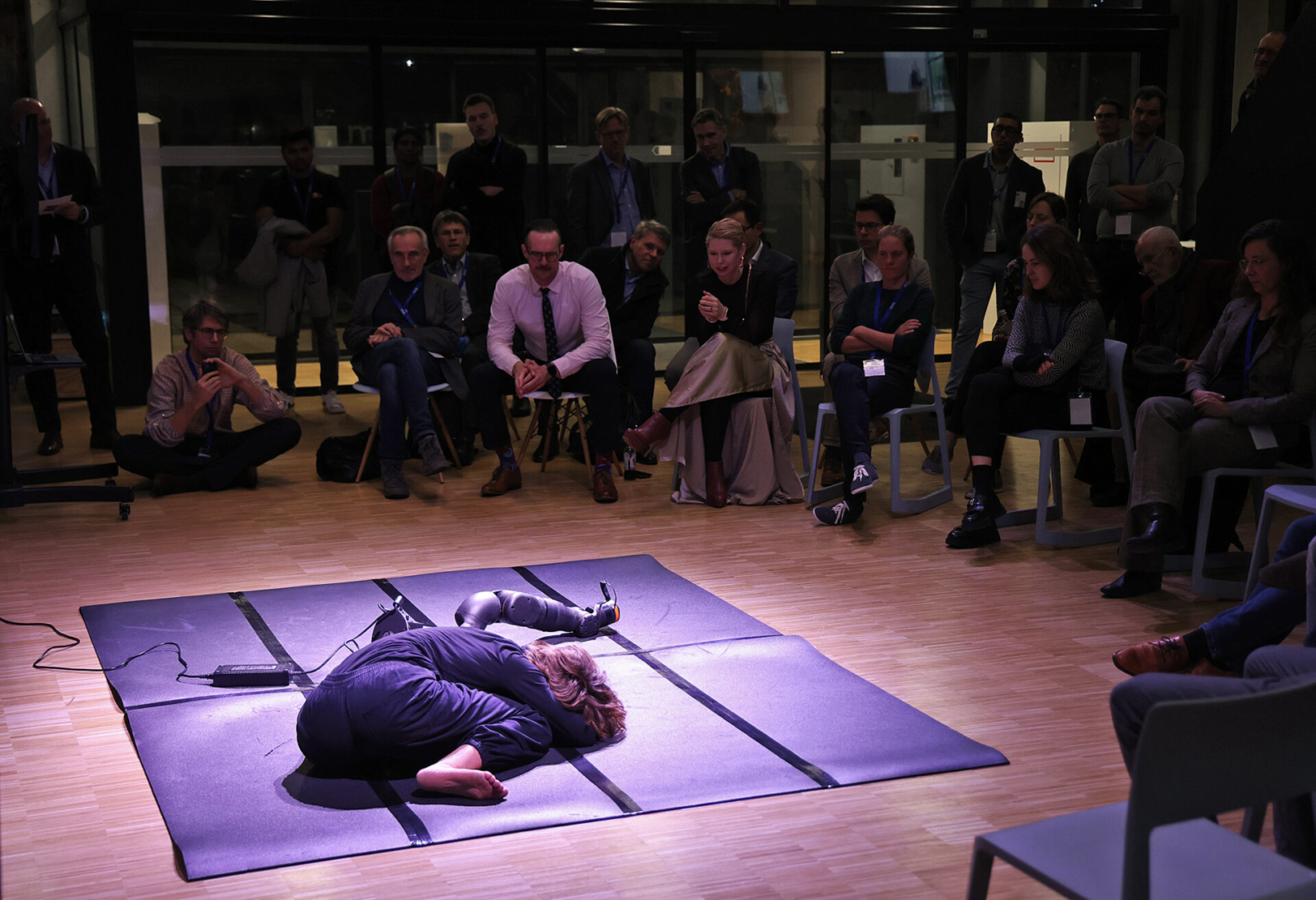
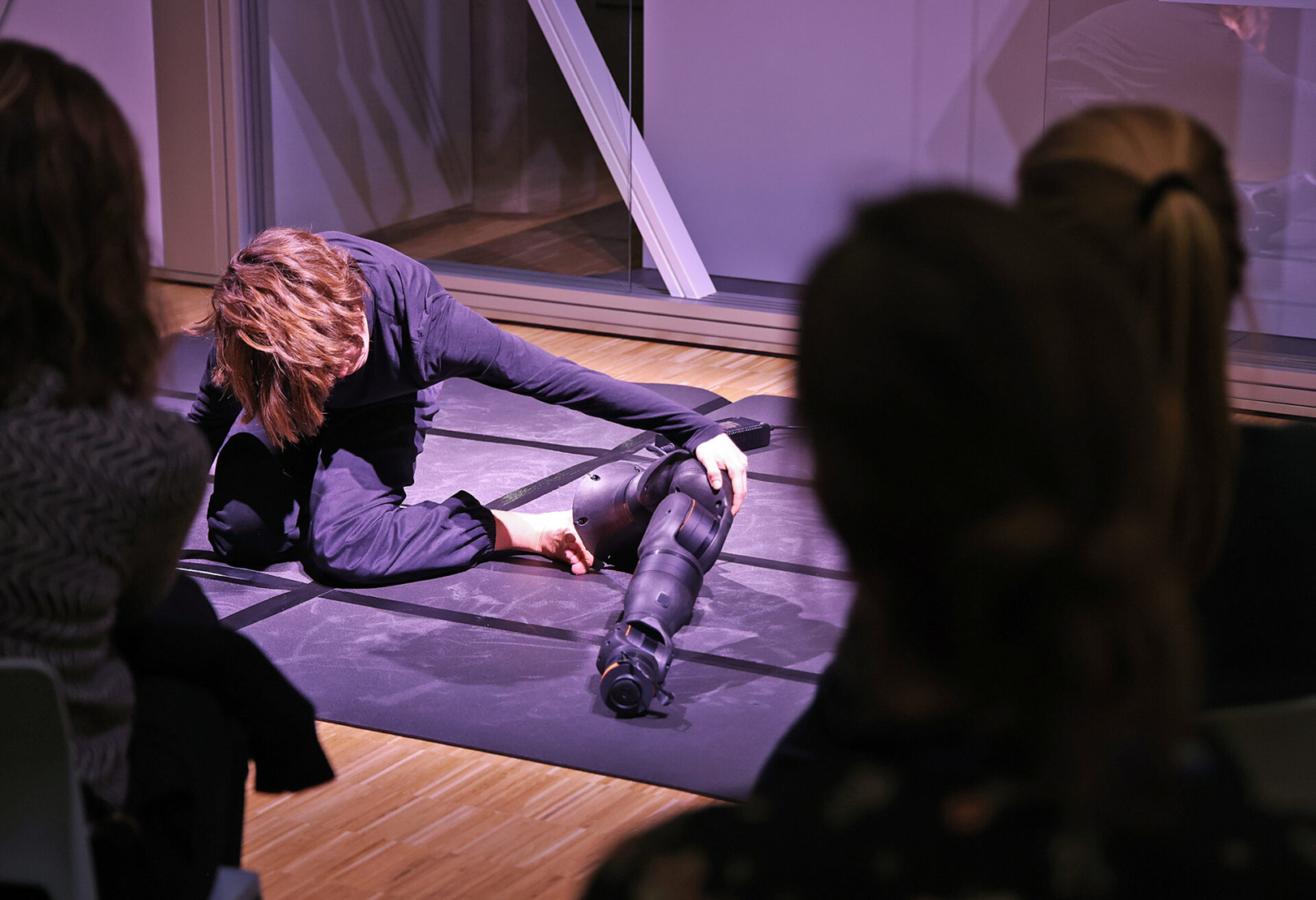
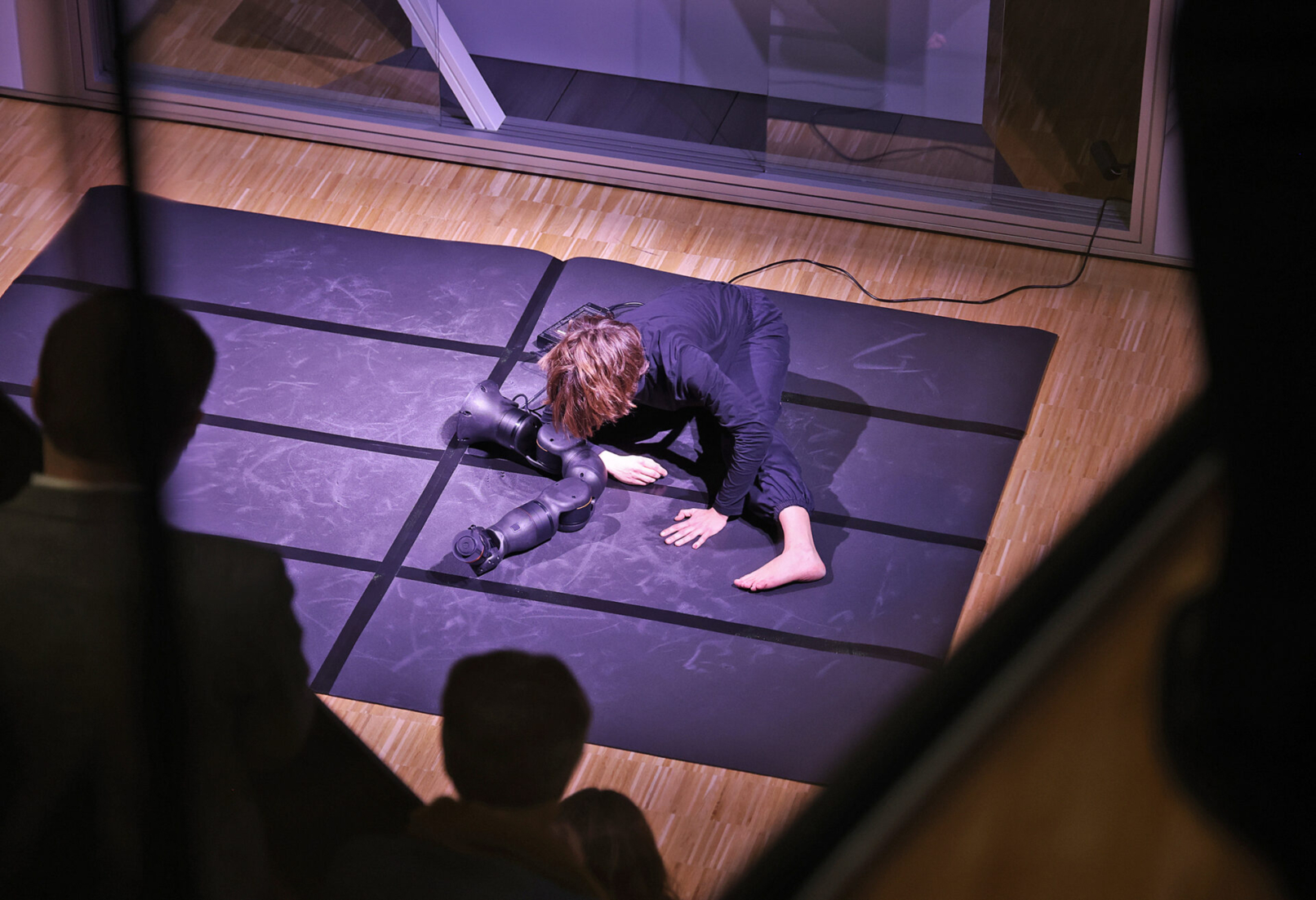
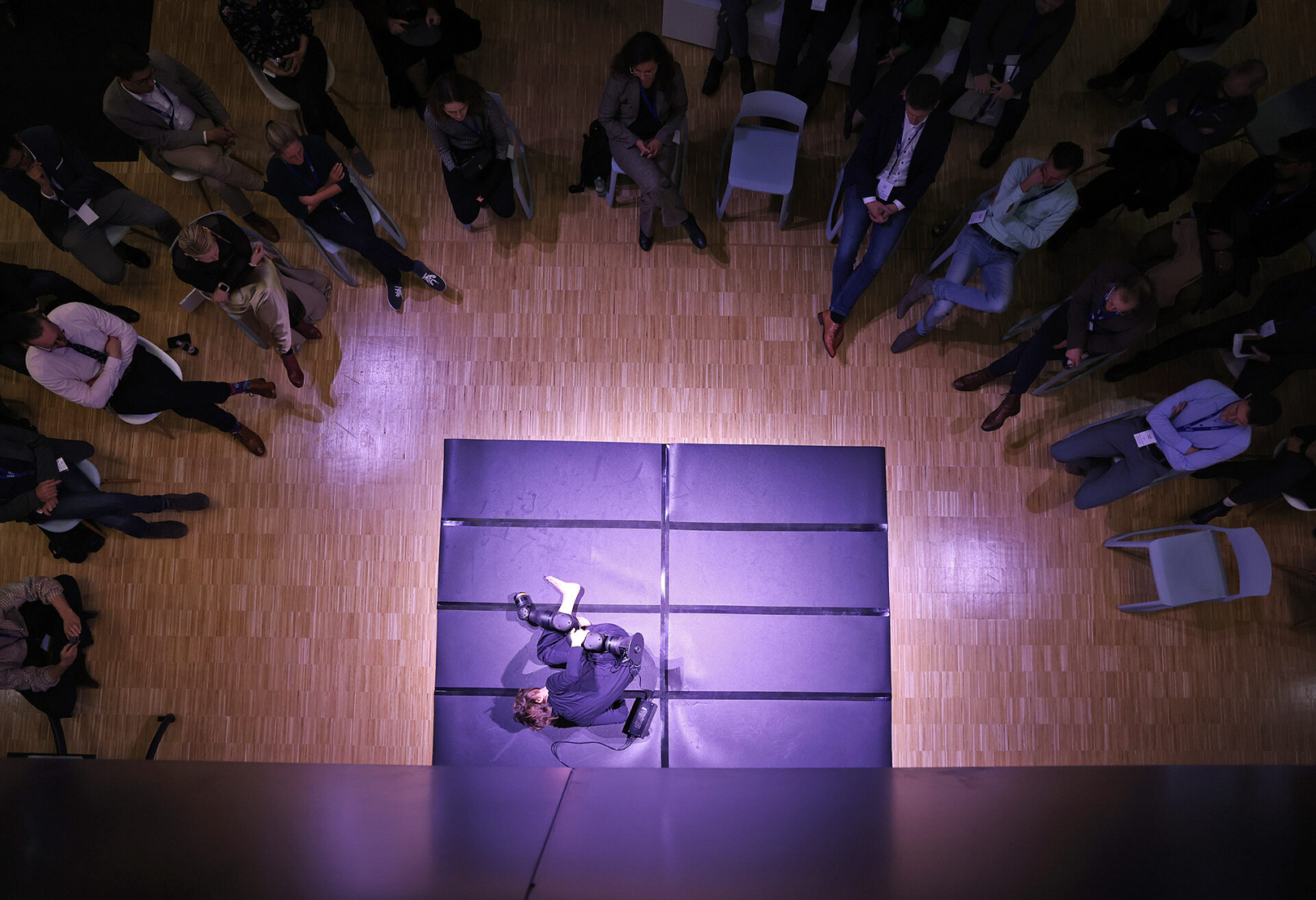
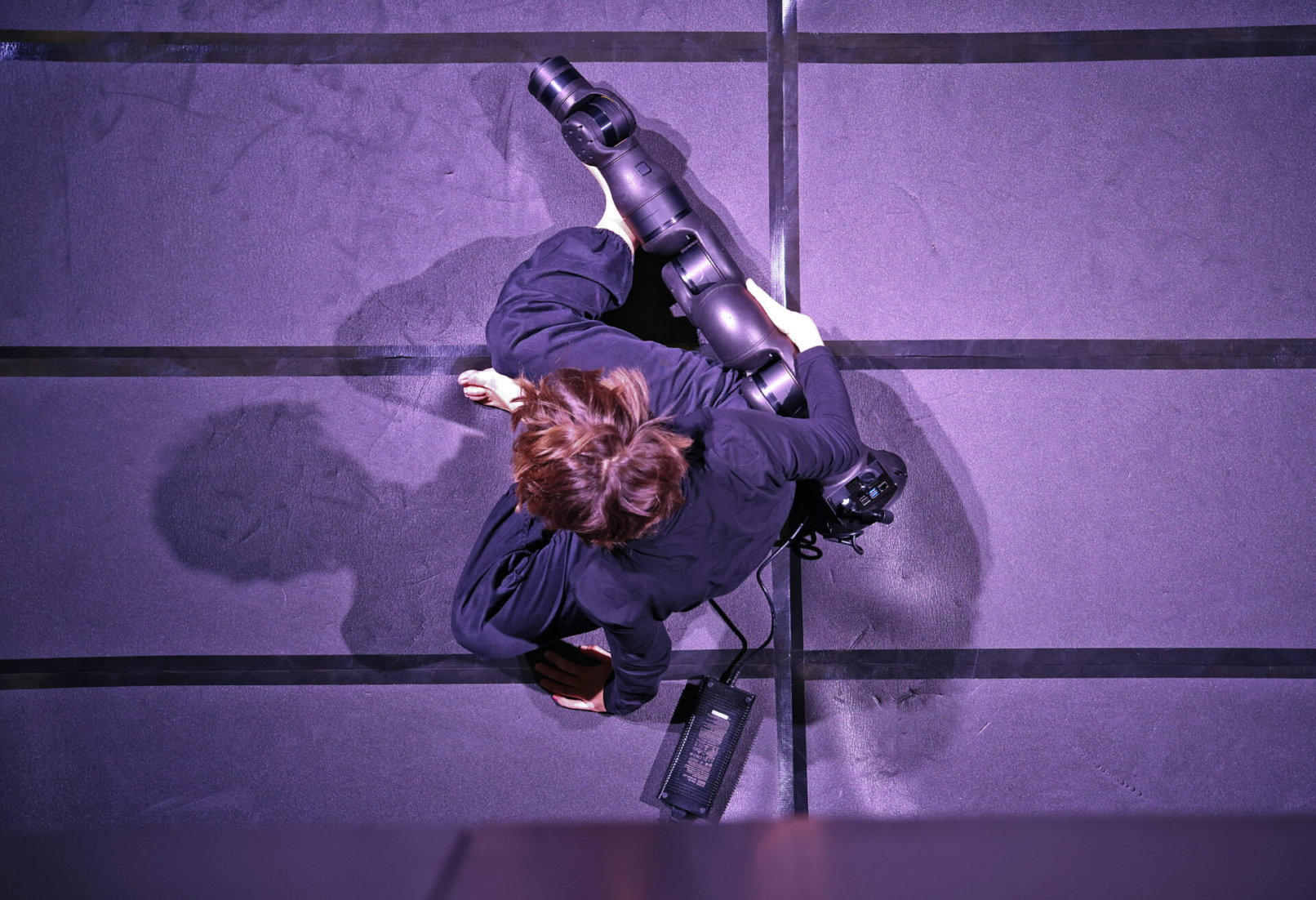
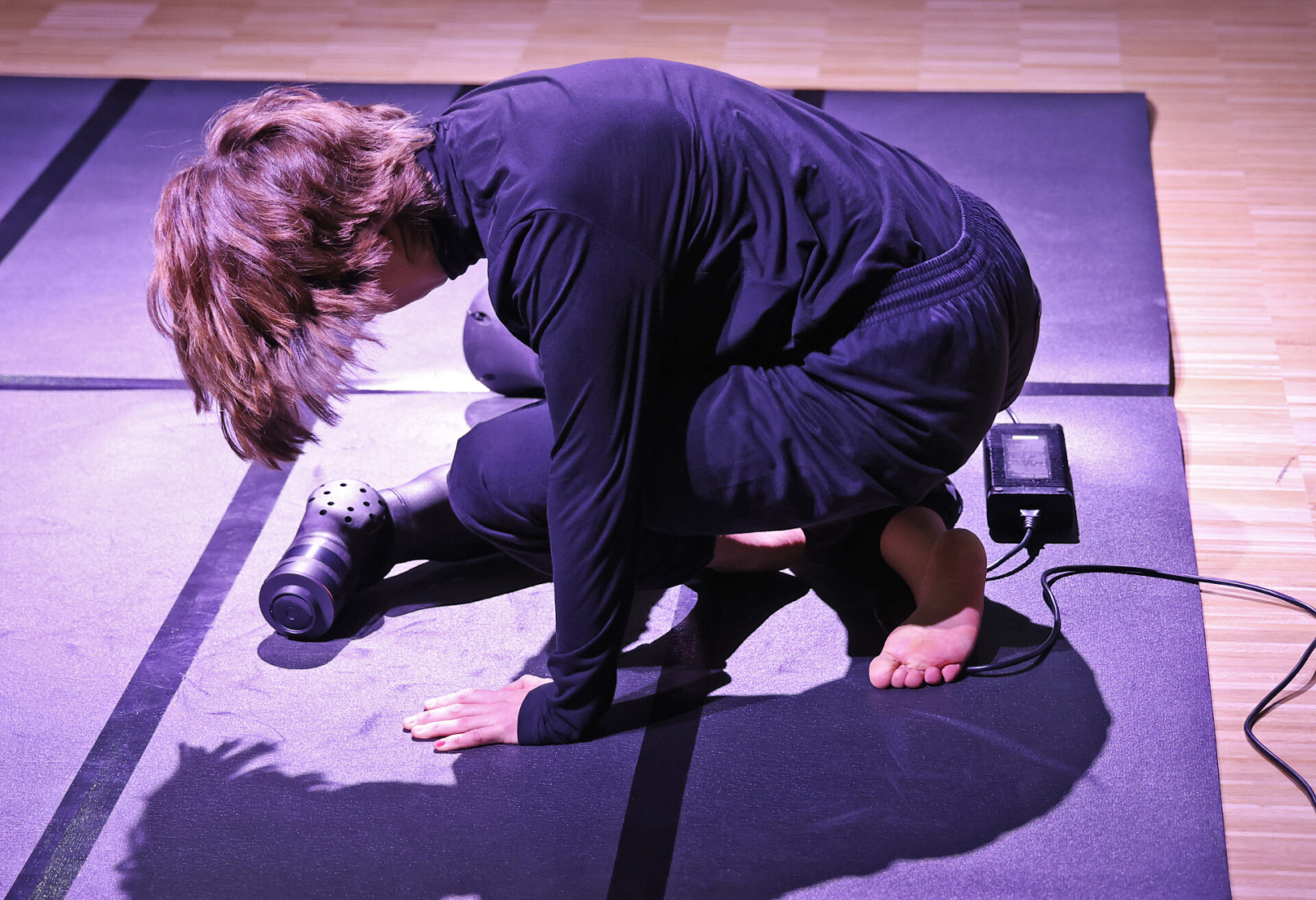
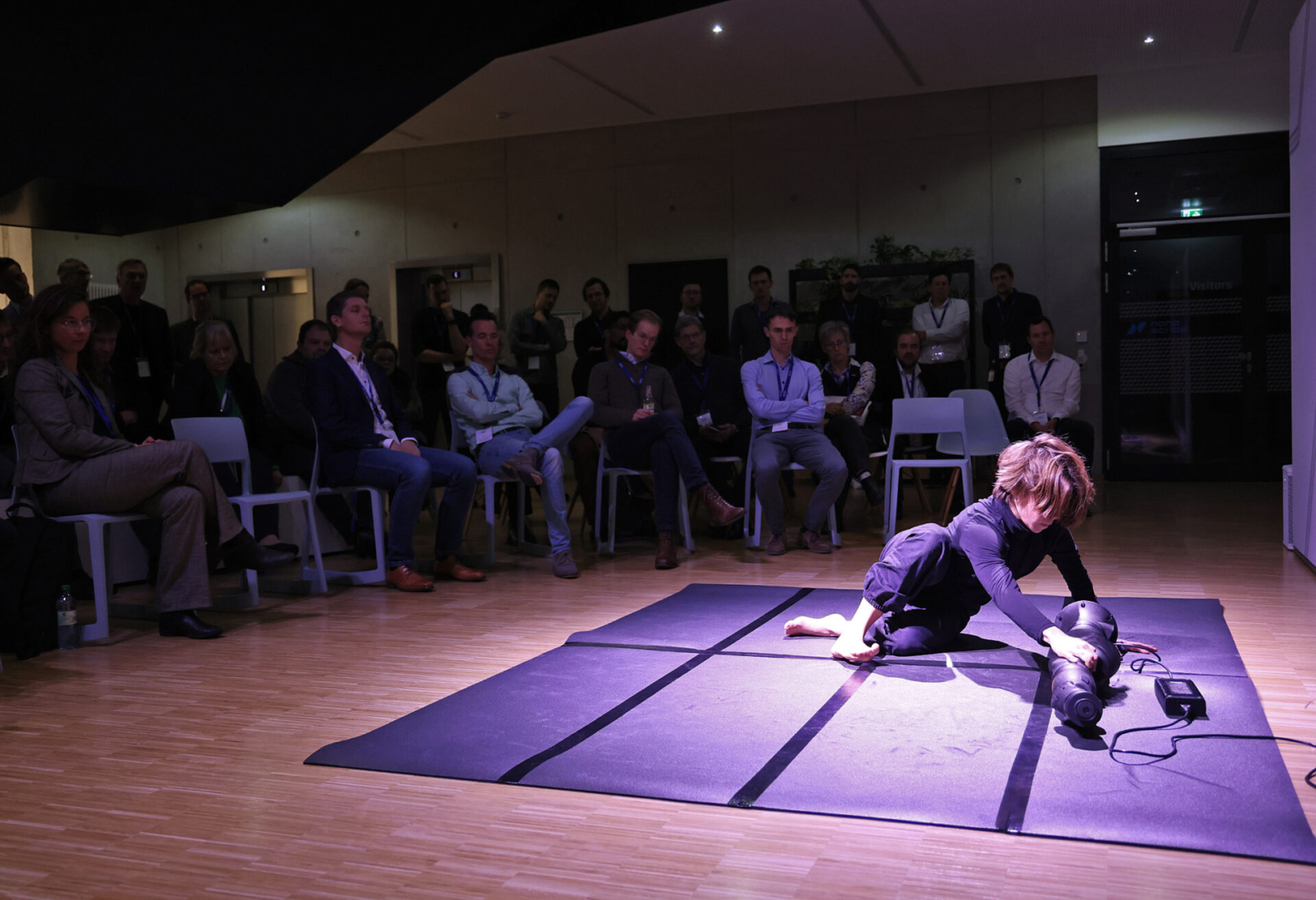
Without a pretrained movement repertoire, the robot arm learns and unlearns how to interact with its environment. Guided by stereophonic listening and torque feedback, it navigates a continuous tension between exploration and resistance, reaching out, pushing against, failing, and adapting. The embodied machine learning is deliberately stretched to become experiential in its own right.
Wibke Storkan, drawing on her practice in contact improvisation with human and non-human co-performers, enters this situation across a fundamental difference in modality, temporality, and sensory access. What unfolds between them is a negotiation between two radically different bodies. These differences are not dissolved but become the generative asymmetry of the encounter, opening a space in which observers can witness their own projections and the shifting relations between themselves, the robot arm, the dancer, and the surrounding situation.
disarming III is part of the ongoing disarming series, which removes industrial robots from functional contexts and places them in performative situations. Instead of efficiency or servitude, the asymmetry between bodies becomes the subject.
Core team
Emanuel Gollob – research, concept & production
Wibke Storkan – dancer, performer
Advice and support
Emmanuel Witzthum – curatorial mentoring
Creative Robotics – robotic hardware support
Duration | 25 Minutes
References excerpt
Barad, Karen. Meeting the Universe Halfway: Quantum Physics and the Entanglement of Matter and Meaning. Duke University Press Books; Second Printing edition (July 1, 2007)
Penny, Simon. Making Sense: Cognition, Computing, Art, and Embodiment. The MIT Press (2017)
Riskin, Jessica. Genesis Redux: Essays in the History and Philosophy of Artificial Life. University of Chicago Press (2007)
Slager, Henk. The Pleasure of Research. Hatje Cantz Verlag (2015)