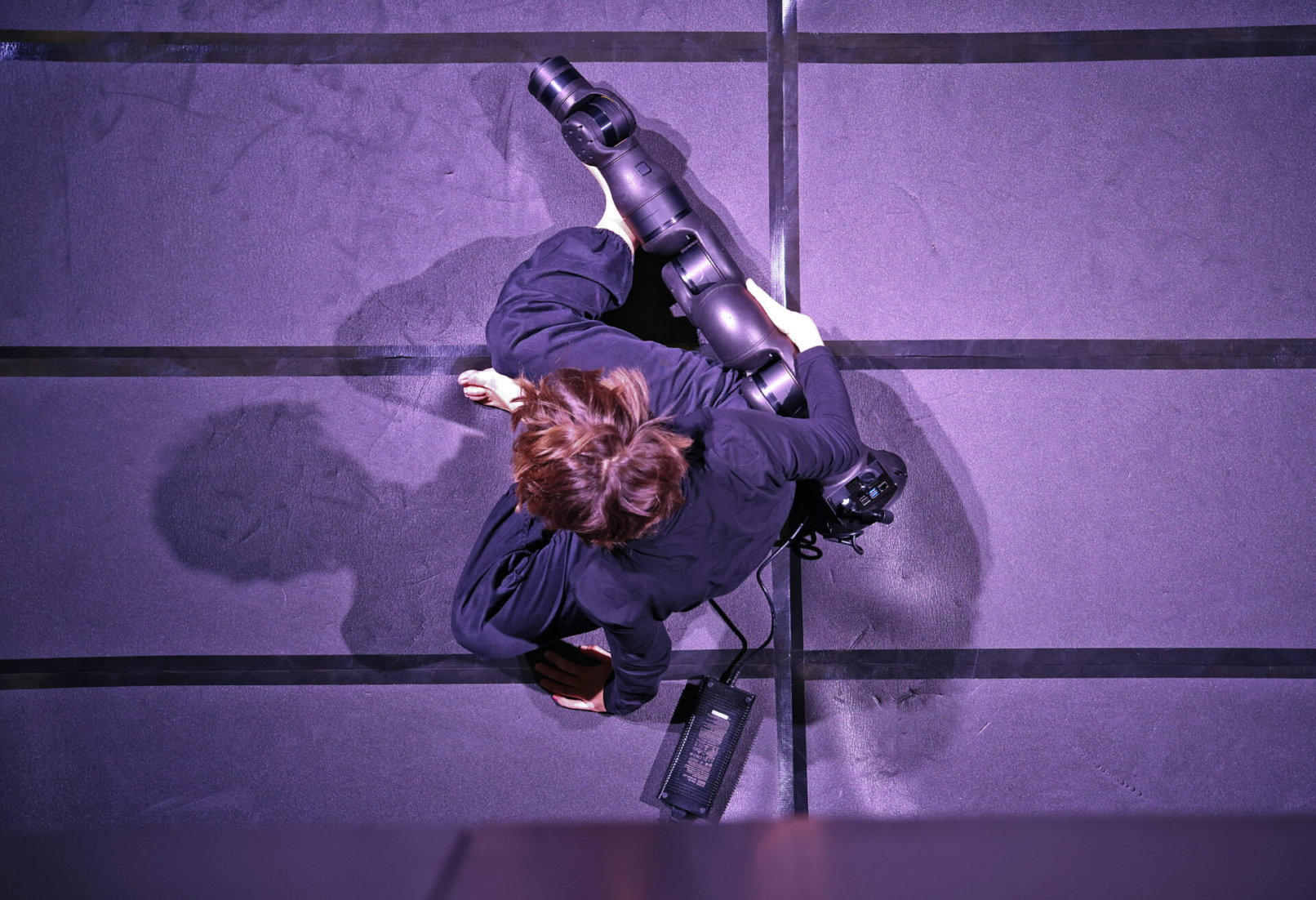
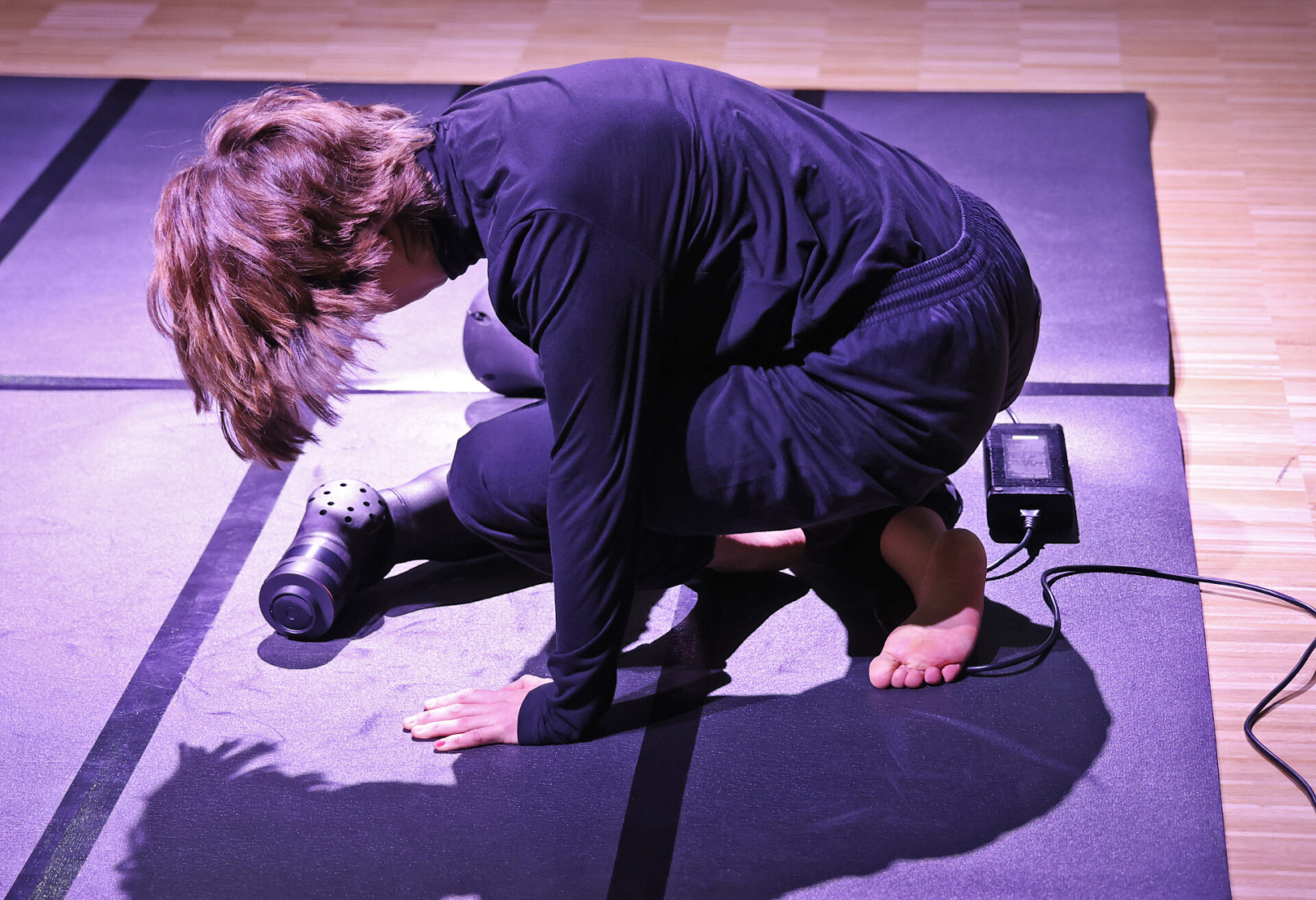
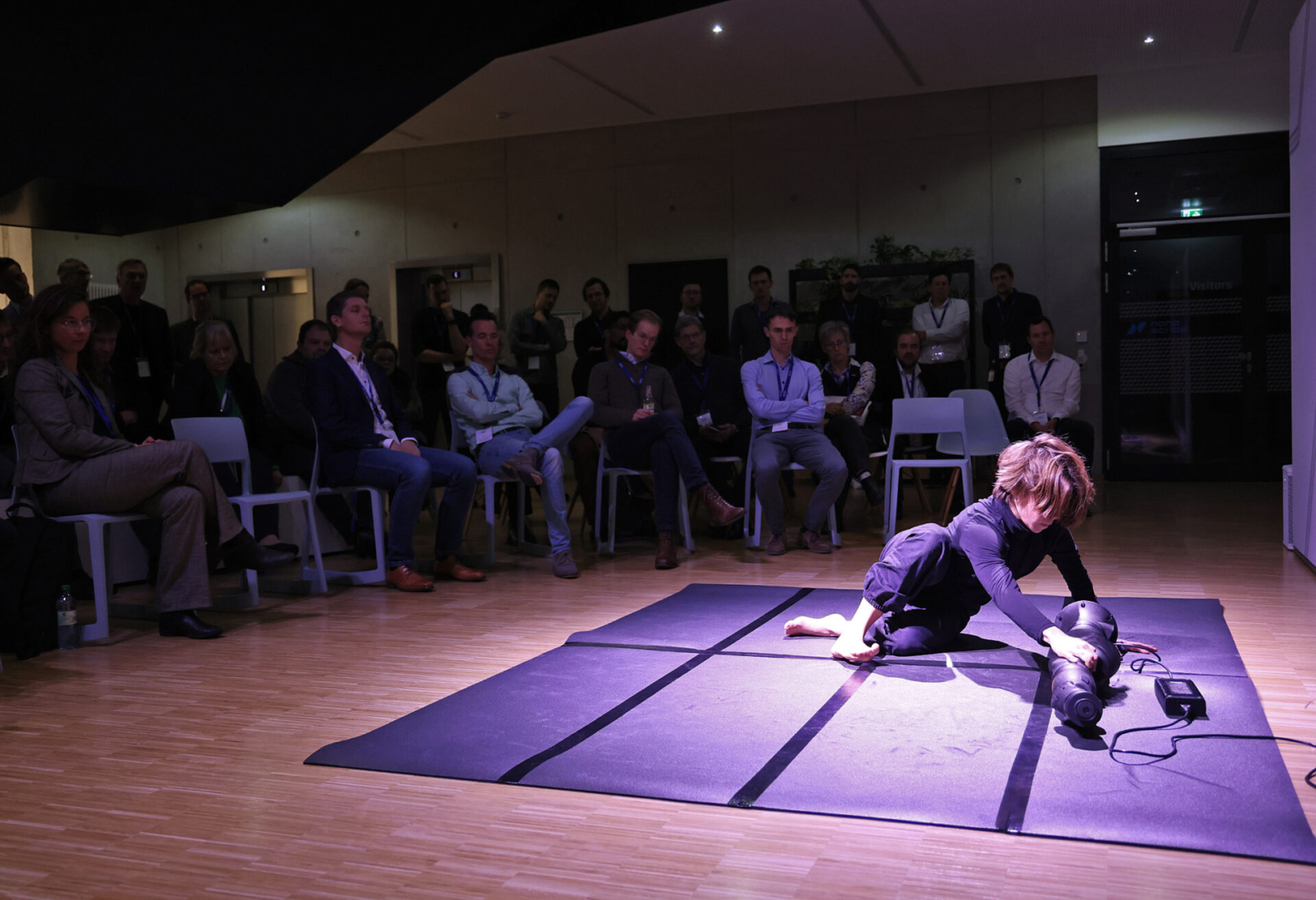
𝙙𝙞𝙨𝗮𝗿𝗺𝗶𝗻𝗴 III
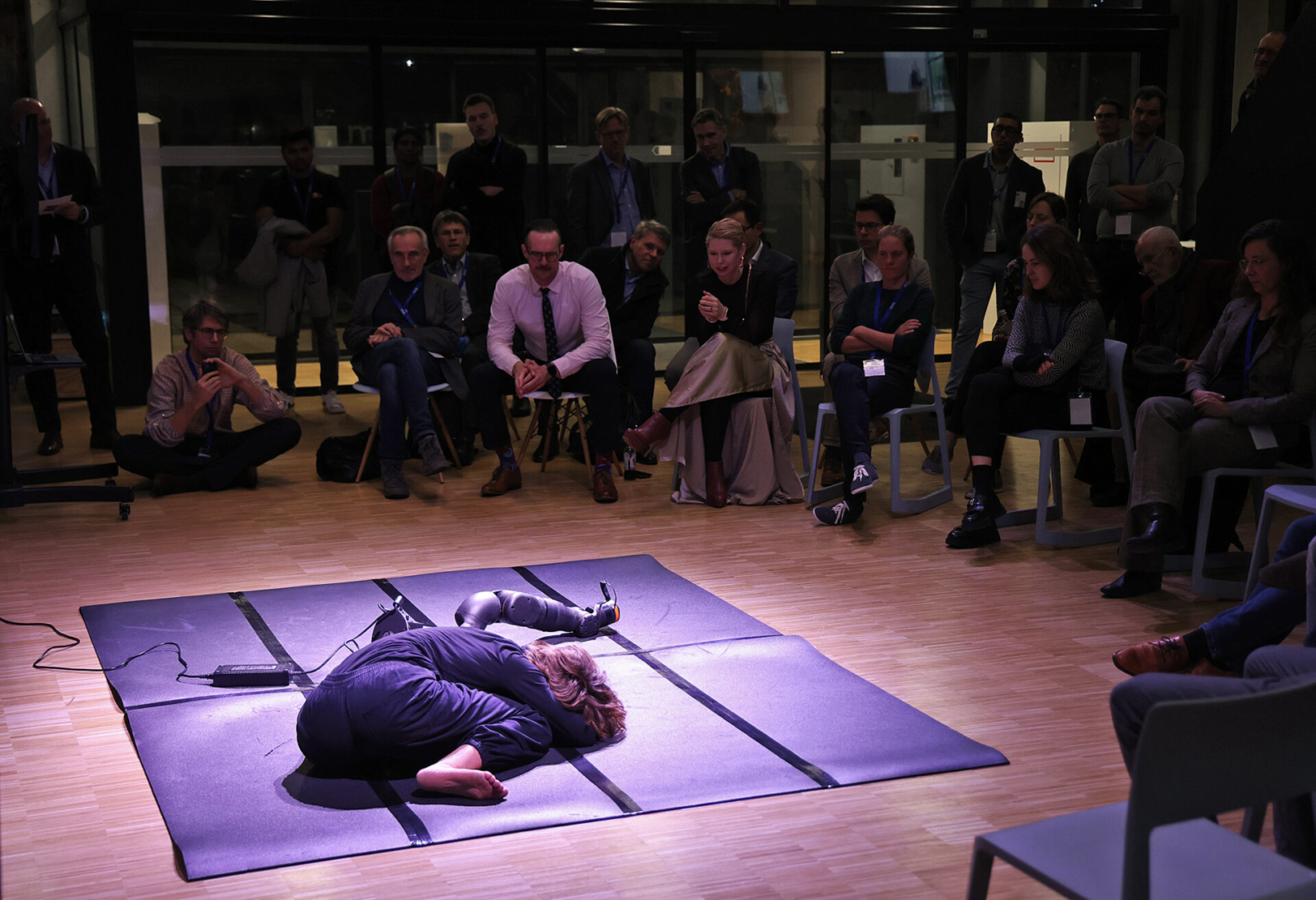
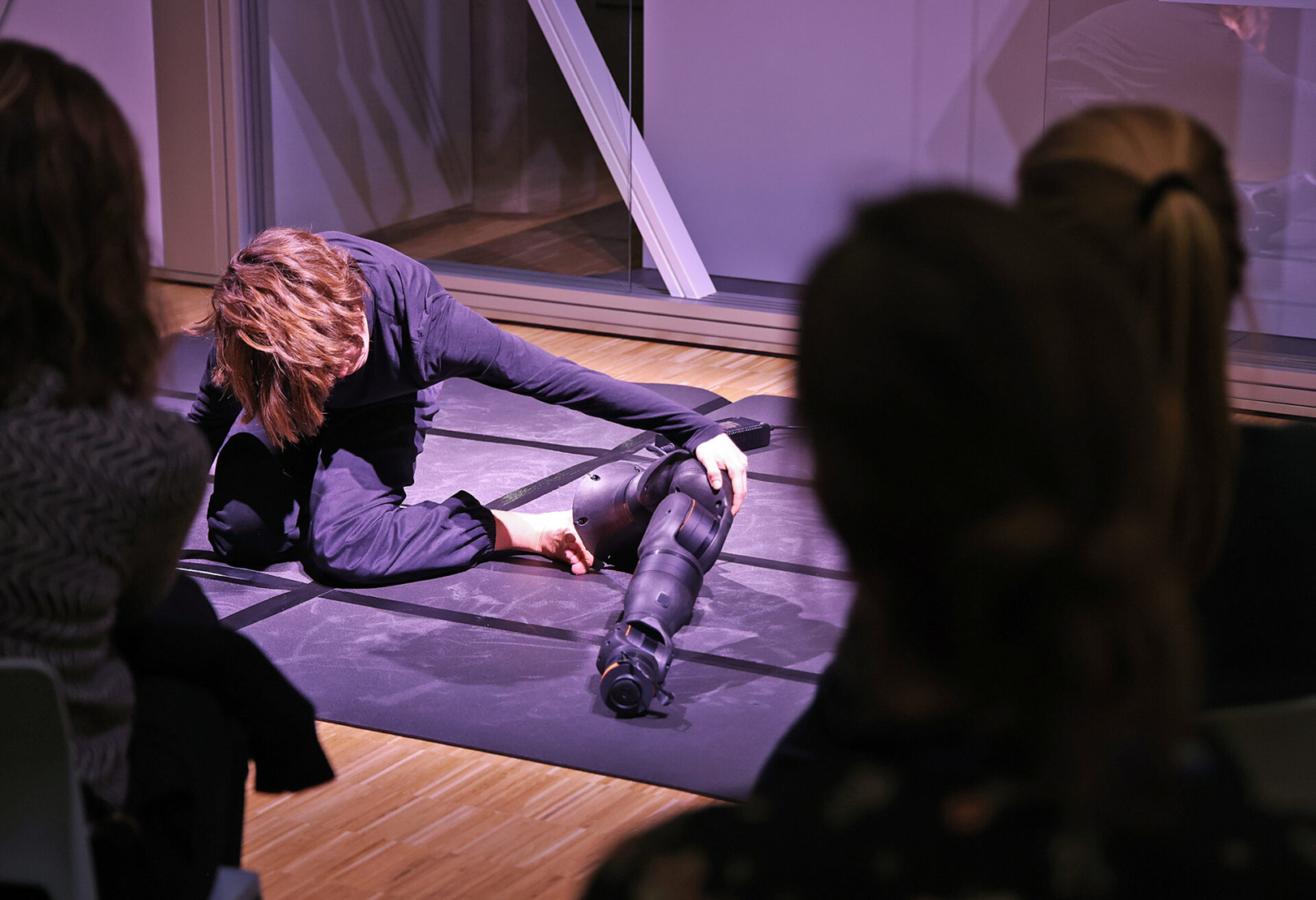
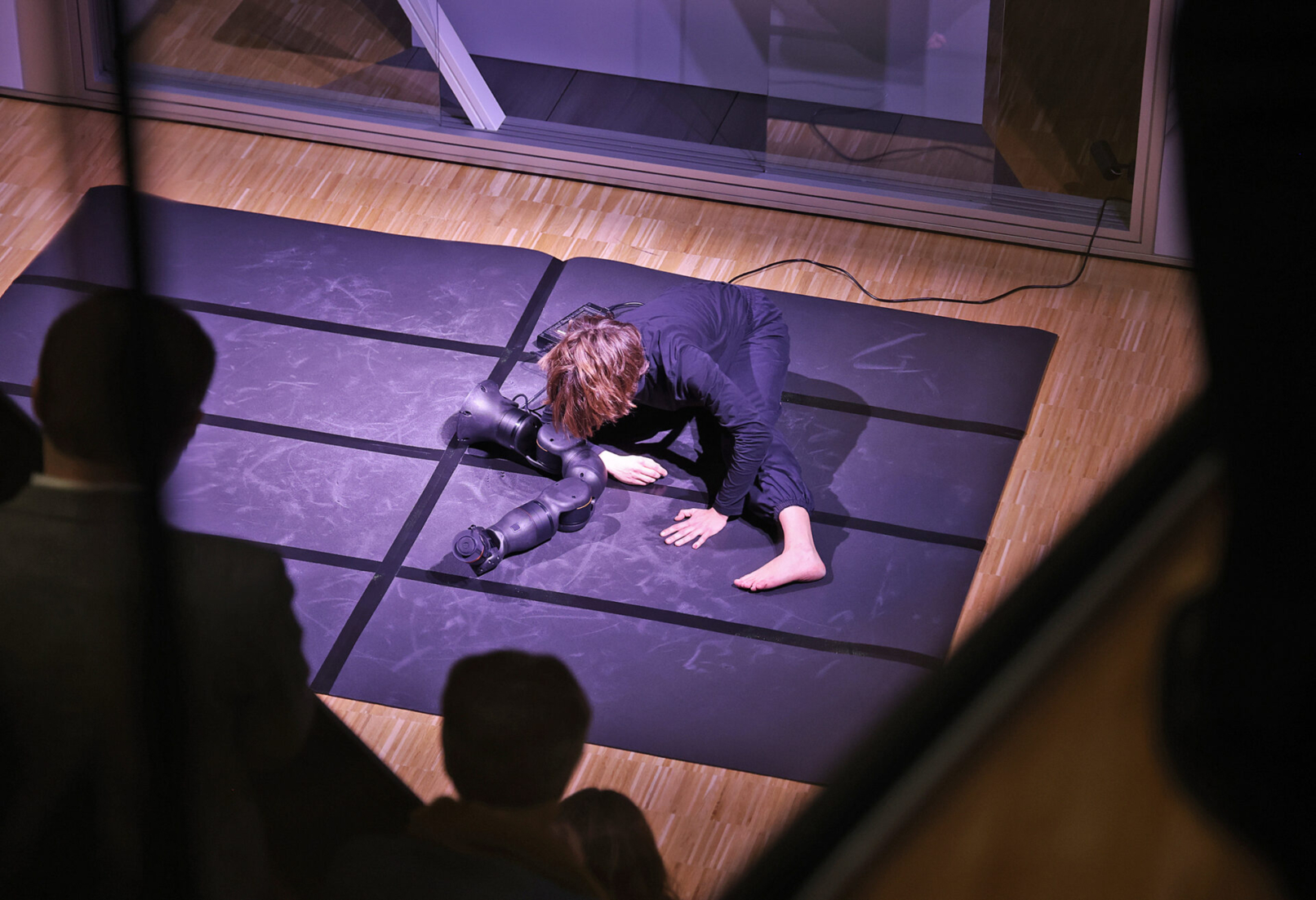
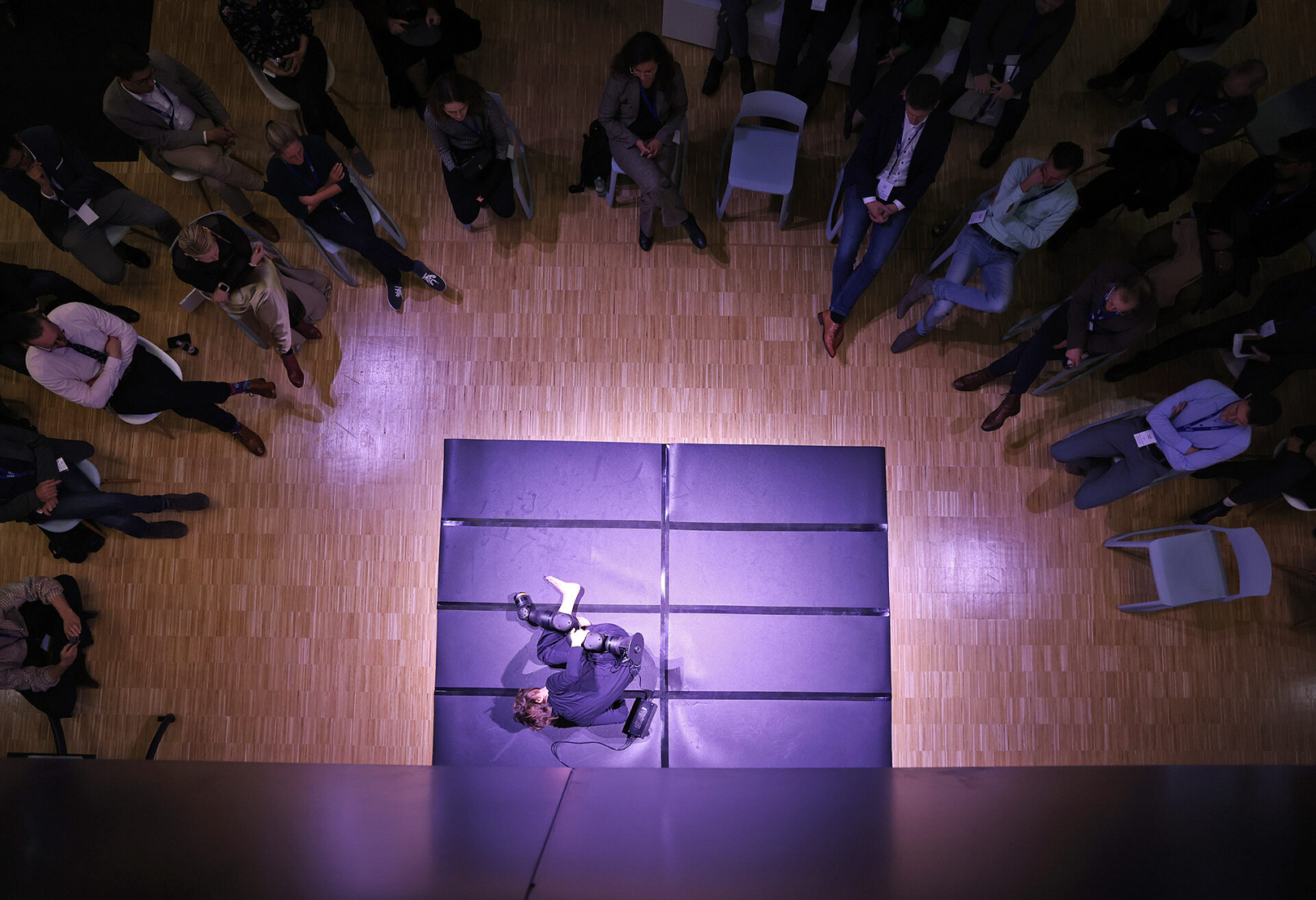
Without a pretrained movement repertoire, the robot arm learns and unlearns how to interact with its environment. Guided by stereophonic listening and torque feedback, it navigates a continuous tension between exploration and resistance, reaching out, pushing against, failing, and adapting. The embodied machine learning is deliberately stretched to become experiential in its own right, slow enough to make visible the projections, attributions, and relational dynamics that emerge between robot arm, dancer, and audience.
My role as artist was to create a setting in which the learning is stretched and inefficient, opening a space in which one can observe one’s own projections and the multiplicity of relationships emerging and transforming between oneself, the robot arm, the dancer, and the surrounding situation.
disarming III is part of my ongoing media art series disarming, which removes industrial robots from functional contexts and transfers them into performative situations. Instead of efficiency or servitude, the encounter itself takes centre stage.
Core team
Emanuel Gollob – research, concept & production
Wibke Storkan – dancer, performer
Advice and support
Emmanuel Witzthum – curatorial mentoring
Creative Robotics – robotic hardware support
Duration | 25 Minutes
References excerpt
Barad, Karen. Meeting the Universe Halfway: Quantum Physics and the Entanglement of Matter and Meaning. Duke University Press Books; Second Printing edition (July 1, 2007)
Penny, Simon. Making Sense: Cognition, Computing, Art, and Embodiment. The MIT Press (2017)
Riskin, Jessica. Genesis Redux: Essays in the History and Philosophy of Artificial Life. University of Chicago Press (2007)
Slager, Henk. The Pleasure of Research. Hatje Cantz Verlag (2015)